Advanced Robot’s experience means they are always challenging me to get the best out of the cows, they maintain the herd’s health status whilst also improving performance.
Making the right decisions in milking robot installs
Getting things right from the start delivers real benefits. Nutritionist and former herd manager Callum Wright believes nutrition should sit alongside infrastructure as a top priority when installing robotic milking systems. First published in British Dairying.

When considering a transition to robotic milking systems, producers are faced with several key decisions and the choices they make will affect them for the next 15 to 20 years. Naturally, the focus here is on the infrastructure to meet the needs of the business.
“Decisions around robots, buildings and cow flow are crucial,” he says, “but nutrition is often overlooked. Many farms see an early ‘honeymoon period’ where visits rise and yields climb but if nutrition isn’t right, problems follow. Nutrition quickly becomes the limiting factor.”
Mr Wright spent five years as a herd manager at Woodend Farm before becoming a nutritionist at Advanced Ruminant Nutrition and has seen both sides of the journey.
“As a herd manager, you’re in the middle of it, training cows, firefighting, trying to keep everything moving,” he explains. “Now I have a clearer picture and see how decisions in one area affect everything else, from cow health to robot visits to overall profitability.”
While early performance in the honeymoon phase can look promising, Callum and the team at ARN often get brought in when the cracks start to appear six to nine months later. Yields may have plateaued or cow health starts to come under pressure. Alternatively, producers may find that yields never quite reach expectations from the start, and the economics become the challenge.
“Quite often the milk is there during the first six months, but it’s being driven by high concentrate use, and feed rates are too high to make the system efficient,” notes Callum.
What to do differently?
If Callum was to wind back the clock at Woodend, he says he would have prioritised nutrition and changed the feeding strategy right at the planning stage.
“If cows hit the ground running nutritionally, it avoids fixing problems while learning a new system,” he says. “Ask early on: can your feeding strategy support higher yields, or will it hold you back? Then make sure you have the right nutritional team experienced in producing results on robots.”
Farm case study
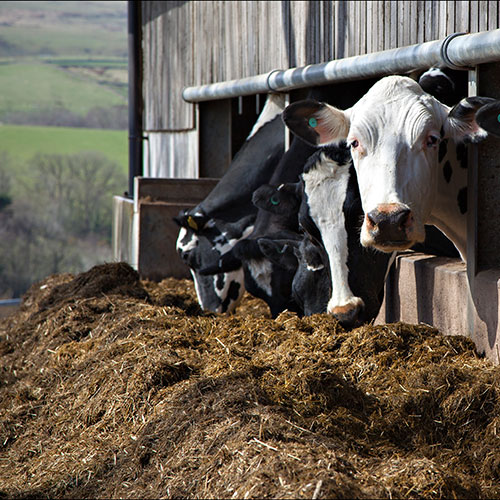
Callum cites Woodend Farm as a common example of what they see. In February 2023, the Paterson family installed two DeLaval VMS 310 robots at a new greenfield site. The move was designed to future-proof the business, improve labour efficiency and unlock more from the herd’s genetic potential. However, while the structure focused on cow comfort and driving production, before ARN became involved, yield and visits hadn’t seemed to have settled and there were issues with lameness and transition management.
“They’d built a good shed and infrastructure conducive to maximising robot performance, but were missing a piece of the puzzle, which was understanding how nutritional management impacts performance both in the long and short term. Without that farms fail to hit the milk yields they expect to achieve,” explains Callum.
“If we can manage diets better through the changeover period to protect rumen health and understand the impact on increased production, we can avoid the “pinch point” that so often shows up at 6-9 months. Instead, we can improve lactation persistency and get the herd consistently on the right path.” Getting on the right path includes identifying bottlenecks early, whether that’s dry cow management, forage quality or mobility and deal with them before the robots get set up. In the dry cow period, higher yielding herds like Woodend, that are already producing over 40 litres can really be exposed.
“Lactation starts off on a much higher plane, and cows will peak earlier. With an effective dry cow management program in place, we can take advantage of this yield without any downside to health and fertility.”
Mobility is another good area to focus on. “If cows aren’t comfortable on their feet, they won’t visit the robot often enough, no matter how good the ration or the technology is. You can’t fix these problems overnight once the robots are in,” notes Callum.
The economics behind increased production should also be considered. While robots can drive higher yields that doesn’t automatically translate into better margins. It all comes back to planning. “One of the first things we look at with producers is understanding the numbers,” says Callum. “Robots come with higher fixed costs, so it’s not just about chasing 40 litres-plus. It’s about knowing what level of production is needed to make the system pay.”
The team introduced a live costing system at Woodend to link physical performance with financial outcomes, helping guide decision-making. Alongside helping the team to understand the huge amount of data coming off the robots.
“The data side of things can be over-whelming, especially if you’ve only just been looking at milk records,” notes Callum. “However, it’s not just about collecting the data, it’s knowing what to look for and how to act on it. That’s where experience and having the right team around you really counts.”
That team approach also helps avoid one of the common challenges during robot start-ups: conflicting advice. With input often coming from manufacturers, vets, nutritionists and others, it can be difficult for farmers to decide which direction to take.
“You can end up with lots of good intentions, but not always a joined-up plan,” says Callum. “If someone changes a robot setting, for example, it can have knock-on effects on the feeding strategy, cow behaviour and overall performance. That’s why communication and having a clear set of goals is so important.”
For farm owner Andrew Paterson, that joined-up approach has been key. “We’ve been working with ARN for over two years now, and they’ve played a big role in helping us move forward since installing the robots,” he says. “What stands out is their experienced approach and understanding. Whether it’s lameness, fertility or costings, they bring in the right expertise at the right time, and that’s made a real difference to how the system performs day to day.”
Looking back, farm owner, Andrew recognises that having that structure in place earlier would have accelerated progress. The 6 – 9 month pinch point can be a real challenge for producers, especially those on a high output system. “If we were doing it again, we’d bring that level of input and planning from ARN in right from the start,” he says. “The difference it makes across the whole operation from cow flow to lactational persistency to financial performance is significant.”
Ultimately, while robotic milking systems promise increased efficiency and higher yields, ARN’s experience suggests that long-term success is built on an understanding the balance between nutrition, cow health and robot settings. This can only be achieved through a joined-up approach and with the right support. Doing this sooner rather than later, can only increase the rewards.
〈 BACK