Advanced Robot have helped us transition onto the automated milking system with impressive results. The team has a clear understanding of how the whole system needs to work, from the cow and her health right through to the robot settings. The cows are healthy and performance is terrific.
Improving feed efficiency through zero grazing and a balanced diet
By implementing a plan for zero grazing and carefully balancing the diet, one herd in Lancashire has seen benefits in yields, efficiency and cost. British Dairying reports.
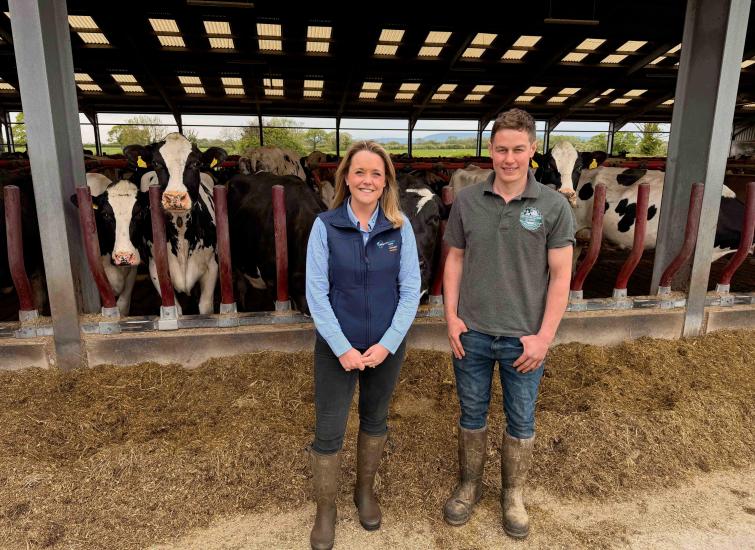
The Eccles family are no strangers to utilising technology and automation, having invested a considerable amount to improve efficiencies on their farm in Preston. When they made the decision to install robots in 2018, the introduction of zero grazing at the same time was always part of their “efficiency” plan, and eight years in the business is really starting to see the financial benefits.
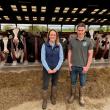
Nick Eccles is a third generation farmer who runs the farm with his brother Chris, father Anthony and mother Christine. Nick’s grandfather purchased the farm in the 1950s with 250 acres, and today the family rents an additional 250 acres while milking 220 Holstein cows through four Lely A5 robots.
Three were initially installed in 2018, with the fourth installed in summer 2025. The milking herd is currently averaging over 40 litres of energy corrected milk at 4.22% butterfat and 3.54% protein. The fourth robot was installed as a dedicated heifer robot. Nine months in, heifers are now producing up to 90% of the milking cow yield, having seen an increase in average yield of over 4 litres since installation.
“We aim to manage as many cows as possible to the highest standard while keeping labour input to a minimum. We make full use of technology and data to ensure the cows stay healthy and that every task is completed efficiently,” explains Nick.
It’s this attention to detail and efficient use of technology that has enabled Nick and his family to run the unit without employing any full-time staff, carrying out all work in-house without the use of contractors. Alongside the robotic milking system, robotic scrapers and feed pushers help keep the unit running smoothly day to day.
Working alongside nutritionist Emma Wells from Advanced Ruminant Nutrition, the farm’s key objectives when zero grazing are to maximise the use of homegrown forage and increase yields, optimising feed efficiency and lowering total feed costs. Maintaining milk solids is also a focus in order to maximise milk price.
Nick says the zero grazing system offers greater consistency compared to traditional grazing. “By bringing fresh grass directly to the cows, we know exactly how much they are consuming, enabling them to capture all the benefits of grazing while maintaining the consistency of a well-balanced TMR.”
“We want to capitalise on the increase in forage dry matter intake that comes with offering fresh grass,” explains Emma. “With traditional grazing, unless meticulously managed, intakes can vary significantly day to day. This can lead to wastage and poor grass utilisation, which in turn impacts yield, body condition and general health. Nick has much more control with zero grazing.”
Balancing the diet is key to effective zero grazing, with routine grass testing for dry matter, energy and protein being an important part of the equation. “We need to utilise the grass in a way that allows us to control the rumen environment and understand how it could affect robot behaviour,” explains Emma. “Grass should never just become a cheaper feed if it comes with unwanted consequences due to poor management.”
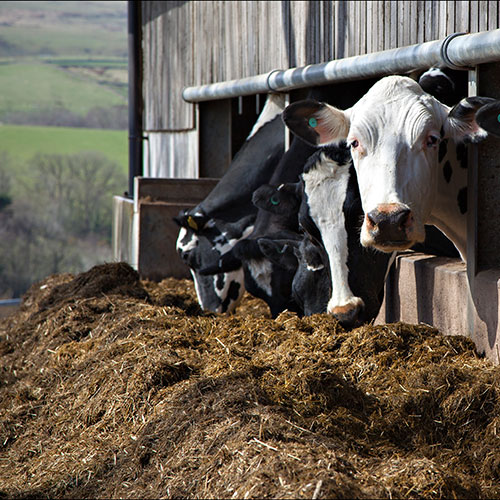
Throughout the summer, the diet is typically made up of 50% fresh grass and 50% TMR on a freshweight basis, with the ration carefully adjusted to complement the nutritional value of the grass. The TMR combines a reduced amount of grass silage, maize silage and blend, with concentrates fed to yield through the robots.
“We aim to zero graze from 1st April through to 1st October and feed fresh grass every day,” says Nick. “There are very few days we miss, unless we’ve had prolonged heavy rainfall.”
Higher energy and digestibility in fresh grass is a challenge to regulate. Managing rumen function is important in order to maximise the value of the zero grazing, but avoid any potential downsides. More frequent ration adjustments are necessary to balance the grass; making the right nutritional changes are crucial to achieve the desired outcome, with the balance between starch, protein and fibre being key.
“To ensure the system is performing as intended, we monitor a number of key metrics closely,” explains Emma. “These include average yield, milk from forage and total feed costs.”
Comparing summer 2025 to winter 2025, the benefits of zero grazing are clear:
- Average yield +2.5 litres
- Milk from forage +3.2 litres
- Increase in feed conversion efficiency from 1.49 to 1.61
- Milking cow feed costs reduced by 76p per cow per day (totalling a saving of approximately £5000 per month)
- Total feed cost (accounting for all forage and concentrates) reduced by 3ppl
Feeding fresh grass also helps preserve nutritional quality that can otherwise be lost during the ensiling process. “With zero grazing, more of the crop’s energy goes directly into milk production rather than being lost through fermentation,” explains Emma.
“There are many other nutritional benefits from feeding fresh grass, including increased levels of nutrients like omega-3s and Vitamin E, all of which support overall cow health and fertility.”
Practically, there are many benefits to zero grazing for Nick.
“Zero grazing delivers significant savings compared to traditional silaging. If you think about the number of tractor passes involved in making silage, there can easily be nine operations compared to just one pass when cutting fresh grass for zero grazing.”
Their grazing platform is managed in much the same way as a silage system. Fields are divided between those destined for zero grazing and those used for conserved forage. During rapid growth periods, additional acreage may be diverted into the silage clamp to maintain quality because if grass becomes overgrown, peak nutritional value is lost. Swards are reseeded every four to five years using high-sugar grass varieties suited to intensive cutting systems, and slurry is applied to zero grazing fields in the winter alone to prevent contamination and potential palatability issues.
“There are two ways to look at zero grazing,” says Emma. “You can either use it to drive extra milk from forage or, maintain the same milk profile while reducing purchased feed costs.”
Nick’s system aims to achieve both. Through careful breeding, data analysis and close monitoring of efficiency using herd management software, the focus is on producing cows that can efficiently convert high-quality forage into milk while maintaining profitable milk solids.
Nick estimates that through increased milk yields, savings in silaging costs and a reduction in bought in concentrates, zero grazing is worth approximately £50,000 a year to the business. “It has been a no-brainer for us – we get all the benefits of grazing with none of the drawbacks.”
Financials of the zero grazing system at Sudells Farm
|
|
Annual Benefit |
|
Income from increased yields of 2.5 litres/cow (2.5litres x 220cows x 180days x £0.32/litre) |
|
|
Milking cow feed costs reduced by 76p per cow per day (£0.76 x 220 cows x180 days) |
|
|
Annual running costs and repayments of zero grazer |
£10,000
|
|
Total annual net benefit: |
£51,776 |
〈 BACK